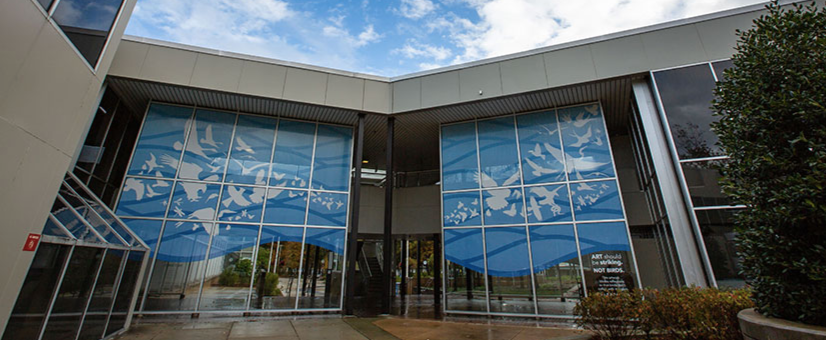
Decorative Pattern at Johnson County Community College by Krystal Anton
Resources
Birds collide with glass because they see the world differently than people do. These collisions kill up to 1 billion birds each year in the United States. We provide some helpful resources for making your home or business safer for birds.
Residential Solutions
Approximately 44% of avian window collisions in North America occur on residential structures and you have probably had birds strike the windows of your home at some point! You can significantly reduce window strikes happening by taking a few simple steps.
Buildings of any size don’t have equal numbers of bird strikes on every window and you probably already know the windows of your home into which birds most frequently fly. There are products and DIY ways to treat those windows. The American Bird Conservancy has extensive resources on the topic and you can find some of our recommended treatments here.
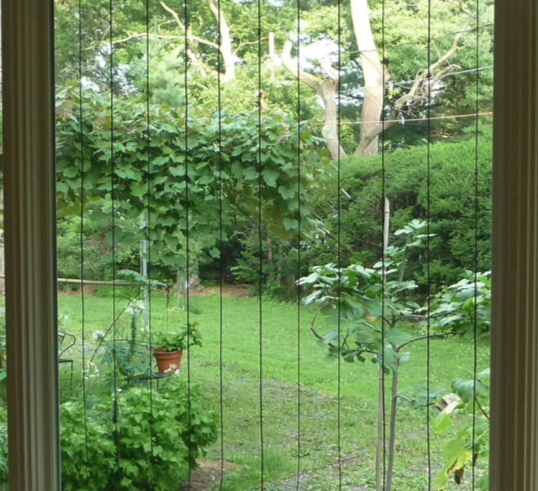
Acopian Bird Savers
Also known as Zen curtains, these attractive additions to the outside of your window are easily made yourself or purchased online. Essentially curtains of hanging string, they’re cost-effective and easy to install. Purchase them or see DIY plans at here.
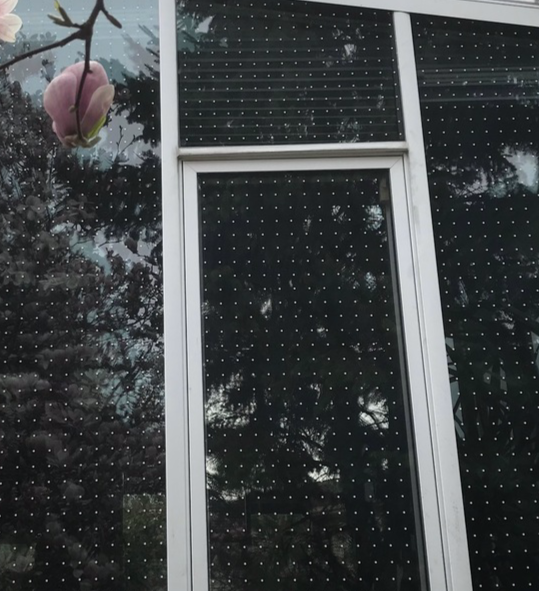
Feather Friendly
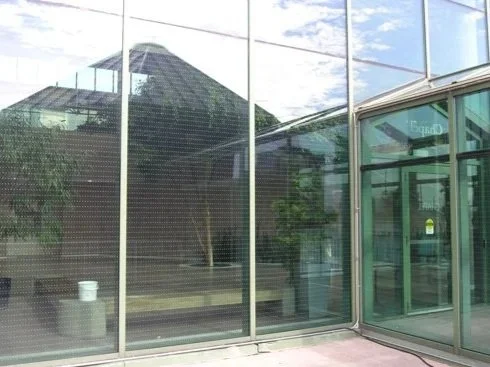
This company offers adhesive dots that act to break up a window’s surface reflection. Similar to the treatments above, the overall look is hardly noticeable to the human eye after a short period of time. Feather Friendly dots are most effective if applied in less than 3″ spacing. You can find residential options here.
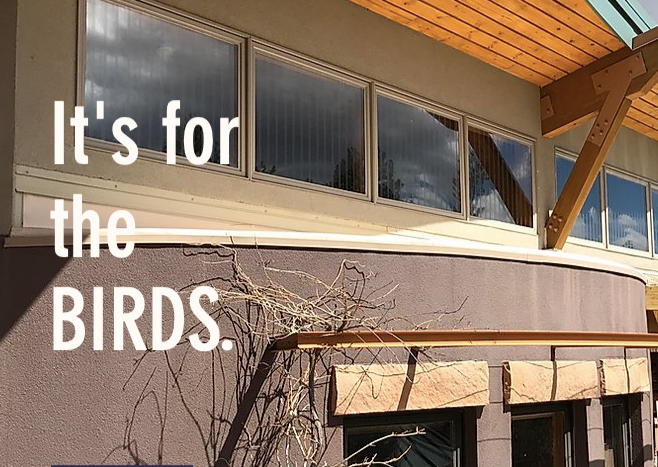
CollidEscape
CollidEscape offers a number of different residential window treatments, including various dot and line pattern adhesives, tints and even images. There are options for every window size and budget. See more here.
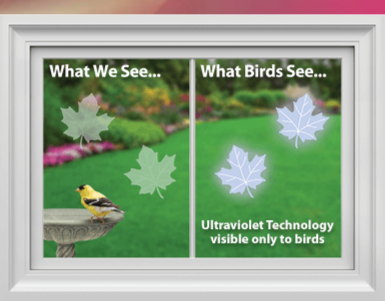
Window Alert stickers
These are a common, worst-case scenario, residential product and are useful for treating relatively small square footage. The reflective decals are easily overlooked by the human eye but are attractive when noticed. Find them here.
Commercial Solutions
Approximately 56% of avian window collisions in North America occur on commercial structures. While it is common to hear about the most dramatic window strike events when they occur on high rises (for example, this incident in Texas), most collisions occur on low-rise buildings less than 10 stories high.
Birds strike windows because they do not recognize glass as a barrier. Several factors cause birds to become confused and fly into windows including:
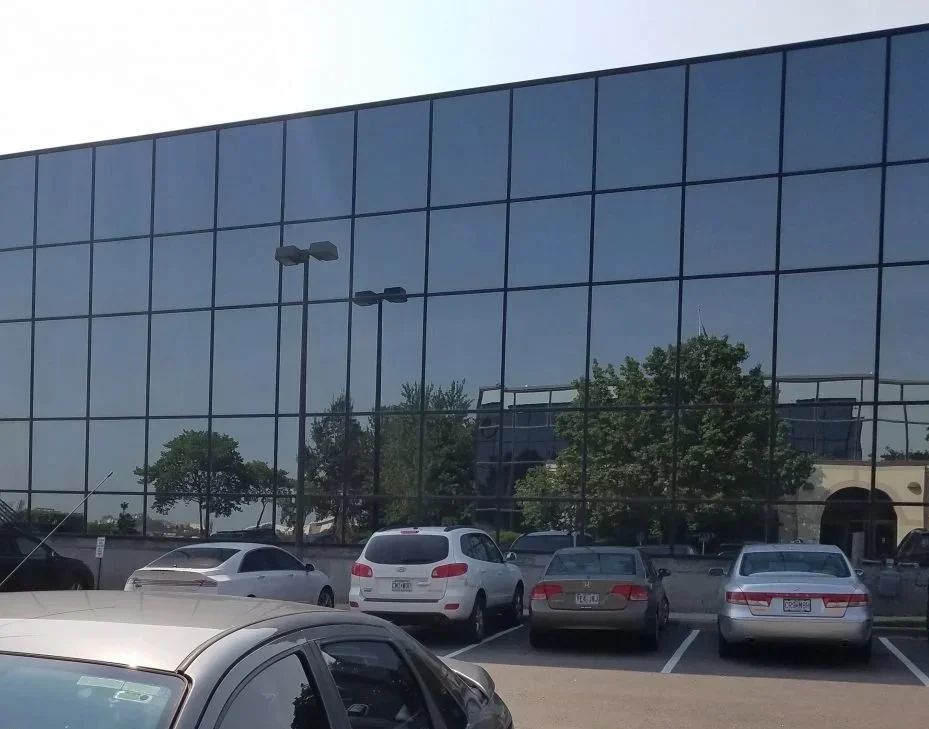
Transparent windows, particularly with vegetation on the opposite side, make it appear to a bird as though it can fly through.
Windows that directly reflect vegetation make it appear as though the bird can reach that vegetation.
Portions of buildings, such as courtyards with many angled sections and some parking garages, can act as funnels and effectively trap birds.
Exterior lights illuminated at night can cause migrating birds to become disoriented and come down to land in an urbanized area, greatly increasing strikes.
Remediation of Problem Windows
Buildings are not designed to cause injury to migrating birds; it’s an unwanted side effect. Many architects now design new construction with bird-safe glass. There are also many after-market products that can be applied to existing windows that significantly reduce bird collisions.
Exteriors that have mirrored glass, it is usually just a few windows with which birds collide – typically those that clearly reflect landscaping. The survey project is designed to clearly document the exact portions of buildings and window panels that are problematic. This allows our partners to remediate most collision-prone windows.
Perks of Bird Strike Remediation
Often, implementing window-strike solutions confers other benefits. For example, adding tint to some windows will increase energy efficiency, however, dimming lighting at night can significantly lower energy costs. Some window treatments are comprised of attractive images or advertisements, especially on commercial office buildings or college campuses.
Solutions to birds striking windows exist for every commercial situation and budget. The American Bird Conservancy provides extensive information. BirdSafeKC coordinators can provide local, on-the-ground guidance, contact us below.
Lights Out
With the majority of birds migrating at night, as they pass over bigger cities, they can become disoriented by the bright artificial lights and sky glow.
By extinguishing lights on commercial buildings at night, building owners can significantly reduce the possibility of migrating birds becoming disoriented by the lights and collide into buildings.